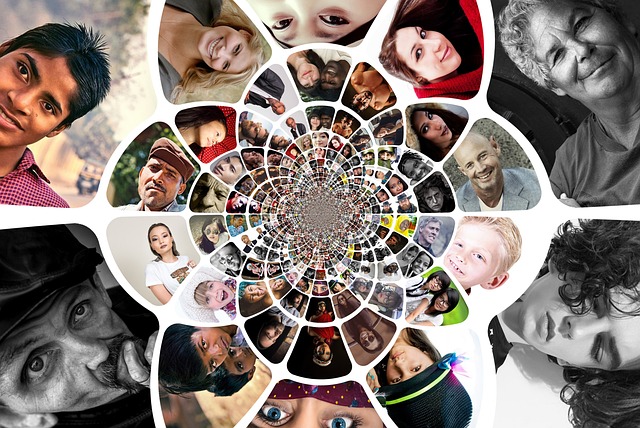
I AM.
Source became aware of itself. And perhaps everything that followed has been an expansion of that first knowing. The One became many. Consciousness localized into countless points of human experience, each protected within its own perspective, each giving the Infinite a different appearance through which to encounter itself.
Suddenly there was a me and a you. And Source could meet itself.
My spiritual mentor once taught me about relationships—how important they are, how much is revealed through them—and yet, over time, I forgot much of the teaching. More than two decades ago, I understood that the other person is a reflection of me. I thought I understood what that meant. But now, more than twenty years later, I see that the reflection goes far deeper than I understood then.
Relationship is not merely something we experience while we are here. I have come to understand relationship as one of the most important reasons we are here.
We are not simply living beside one another. We are revealing one another.
The Other Is You
The first thing I experienced during my awakening was that we are all One Being. I am you. You are me. And we are God.
For years I understood this primarily as a spiritual truth. But recently I began looking at the people currently surrounding me and asking what Oneness actually means when brought into relationship.
If the other really is me, what am I looking at? So I made a list.
I looked at my mother and saw pain, burden, survival, courage, protection and my determination to make different choices.
I looked at my sister and saw strength, intuition, nurturing and the protector I became very young.
I looked at my son and saw warmth, unconditional love and the mother in me.
My closest friendship reflected fun, care, support and tenderness.
My spiritual mentors reflected the teacher and healer.
Some coworkers reflected my intellect and efficiency. Others my leadership, intuition, insecurity, stubbornness, organization, fear, spirituality, independence, calmness and ability to surrender control.
One reflected beauty and reopened my complicated history with appearance, comparison, worth and belonging.
Another reflected spiritual awakening because we can speak the same language of Source, love and consciousness.
And the man who awakened my Eros reflected adventure, romance, creativity, longing, spiritual growth, revelation, movement—and some of my deepest vulnerabilities.
Then I stood back and looked at all of them together.
And there I was.
Not merely the personality I usually call me, but an extraordinary constellation of everything currently moving through this localization of Source.
I could see the many expressions of myself reflected back at me: my strength and vulnerability, intellect and insecurity, the mother, protector, lover, teacher, creator and spiritual enthusiast; the woman who nurtures and leads, who longs and fears, who often carries too much and is learning when to put the weight down.
Each person illuminated something in me, telling me who I AM. And they have been telling me all along.
The Mirror Is Not Simply Resemblance
When we say another person is our mirror, it is easy to reduce the idea to personality. If someone is vain, I must secretly be vain. If someone is angry, they are reflecting my anger.
If someone hurts me, I must somehow have attracted the wound. But Oneness goes much deeper than this.
The other is not merely your mirror because they possess characteristics that resemble your own.
They are another aperture of the same Being.
Source is looking through your eyes. Source is looking through theirs. Localization protects those experiences from one another.
I cannot directly experience your memories, your pain or the private interior world through which you experience yourself. If I could experience everything occurring through every human localization simultaneously, this particular experience of being me could not remain intact.
Limitation protects the human experience.
Source remains infinite in Being while becoming finite in direct experience.
This is what allows the One to encounter itself as though it were another.
And relationship becomes the bridge across that apparent separation.
Who Are You When You Meet Another?
This changes the question. Instead of only asking:
Who is this person?
Ask: Who am I when I encounter them?
Notice what rises within you. One person may make you feel safe while another awakens insecurity; one may call forth your tenderness while another exposes jealousy or defensiveness. Someone may expand your mind, awaken your sexuality or creativity, make you feel deeply understood, or reveal exactly where you still feel unseen. These responses are not incidental to the relationship.
The emotion itself is information. They reveal what becomes active in you through encountering them. And that revelation is part of the relationship.
You Are Happening to Them Too
But the mirror moves in both directions. Other people do not exist merely to teach us lessons. We are entering their experience too.
Your love affects them. Your fear affects them. Your presence affects them. Your absence affects them.
Something you say may alter how another person understands themselves. That changed person then enters another relationship differently.
Perhaps someone finally experiences safe love after years of instability. They change. They raise a child differently. That child enters friendships carrying a different understanding of love. Those friends are changed through knowing them.
The original relationship has now travelled far beyond the two people who experienced it.
Source propagates its own development through relationship.
One localization changes another. The changed localization encounters another. The experience continues outward. We are constantly altering the conditions under which Source encounters itself next.
We Carry Ourselves Forward
This is also why relationships can seem to repeat. We change the face and wonder why the experience feels familiar.
Another unavailable lover. Another person we try to rescue. Another friendship in which we disappear. Another authority figure whose approval we need. Another relationship in which we carry everything.
Patterns repeat because we carry ourselves from relationship to relationship.
Until something becomes visible. Until something changes. Until we finally understand what we have been trying to show ourselves through one another.
But repetition is not always unhealthy. Love repeats. Safety repeats. Nurturing repeats. Friendship repeats. Wisdom repeats.
Once something changes within us, we carry that forward too. We do not merely carry our wounds into relationships.
We carry our healing.
And because every relationship changes the consciousness entering the next one, nothing truly happens in isolation.
Some People Awaken What Others Will Receive
Not everyone who awakens something in us is meant to remain beside us forever. This can be difficult to accept.
Someone may awaken your spirituality without being able to travel with you spiritually. Someone may awaken your heart without knowing how to hold it. Someone may awaken your creativity and never participate in what you eventually create.
The person who awakens you is not necessarily the person who accompanies what has awakened.
But this does not make the relationship meaningless.
Ask instead: What became possible in me because we met?
Sometimes that is the revelation. The relationship opened something. And what opened belongs to you.
The Art Is in Seeing
Conscious relating does not mean endlessly analyzing everyone around you. It means becoming aware of what is happening between you—recognizing what belongs to their behavior and what is being stirred by your own history, what you may be projecting and what they are genuinely revealing, what you admire, resist, repeat, give and receive.
Every relationship creates movement within us, sometimes exposing old wounds that need healing and sometimes awakening something we did not know was waiting to emerge. And perhaps the most important question is: Who are you becoming through knowing one another?
Love does not always mean stay. Fear does not always mean leave. Jealousy does not mean another person possesses something you lack, attraction does not necessarily mean destiny, and pain does not mean you deserved the wound.
Emotion is an experience arising within this localization of Source. Listen to what it is revealing before deciding what it means.
There You Are
Look at the people currently standing on the stage of your life—not only those you love, but those who challenge you, fascinate you, awaken you, make you laugh, stir your insecurity, call forth your protection, or perhaps are finally asking to be released. Then stop looking at them individually and step back far enough to see the entire constellation. What are they telling you about you?
When I did this, I saw myself more clearly. Each relationship illuminated another angle from which my localized expression of Source could know itself. And then the mirror became larger still, because I realized I was doing the same for them.
In that realization, I fell deeply in love with all my relations. Not because every relationship had been easy or every experience beautiful, but because I could suddenly see them differently: each one a meeting with another expression of the same Divine Life. They brought me a deeper knowing.
We are moving through one another, changing and revealing one another, carrying something from every encounter into whatever comes next.
Perhaps this is what relationship has always been: Source meeting Source through the beautiful protection of difference, the One taking countless forms and momentarily forgetting what it is encountering.
Through love and pain, recognition and friction, desire and compassion, something becomes known that could not have been known in quite the same way before.
The first relationship was Source itself, and we are still inside that relationship—still discovering, still loving, still becoming and evolving.
The art of relating is the art of Source learning to recognize itself without destroying the beautiful boundary that allows it to say, “This is who I AM.”
”For what is inside of you is what is outside of you,
and the one who fashions you on the outside
is the one who shaped the inside of you.
And what you see outside of you, you see inside of you;
it is visible and it is your garment.”
The Thunder, Perfect Mind (The Nag Hammadi)


