In many journeys, the soul communes with the Higher Self after moving through the astral planes. This is because the Higher Self holds the full blueprint — the master record of all incarnations — and is the one who enacts contracts through the incarnated soul. By communing with the Higher Self, each incarnation is kept in harmony with the larger design.
Souls tend to make agreements within the astral itself. In the middle and higher astral realms, souls often meet, plan, and agree to return together. These arrangements act like localized contracts, and the next incarnation may unfold directly from that astral agreement without the soul fully merging back into the Higher Self first.
The distinction lies in scope. Astral contracts tend to be more personal and immediate: promises such as, “We’ll meet as siblings next time,” or “I’ll take on this role for you.” Higher Self stretches across a broader horizon — weaving karma balancing, long-term lessons, and the orchestration of an entire soul group across many timelines. Even when a soul incarnates directly from the astral, the Higher Self is still quietly guiding the process, whether the soul is consciously aware of it or not.
This often occurs when souls are highly active or deeply bonded. They may incarnate quickly, carrying the freshness of their astral agreements into physical form. This is why certain connections feel as though they just crossed paths on “the other side” — because they truly did. Still, the Higher Self remains the coordinating hub. Even when a soul bypasses reintegration, its energy threads back into the Higher Self’s awareness.
The takeaway is simple: a soul does not always need to pause and fully merge with the Higher Self before incarnating again. Contracts can be formed in the astral plane, and new lives may emerge directly from those agreements. Yet no matter how swiftly or personally the arrangements are made, the Higher Self always oversees and integrates, for it is both the soul’s true origin and a destination.
A soul doesn’t have to pause and fully merge into the Higher Self before incarnating again. Contracts can be made in the astral plane, and incarnations may launch directly from there. But whether the soul realizes it or not, the Higher Self always oversees and integrates — because it is the soul’s true origin and a destination.
Quick Reference Guide
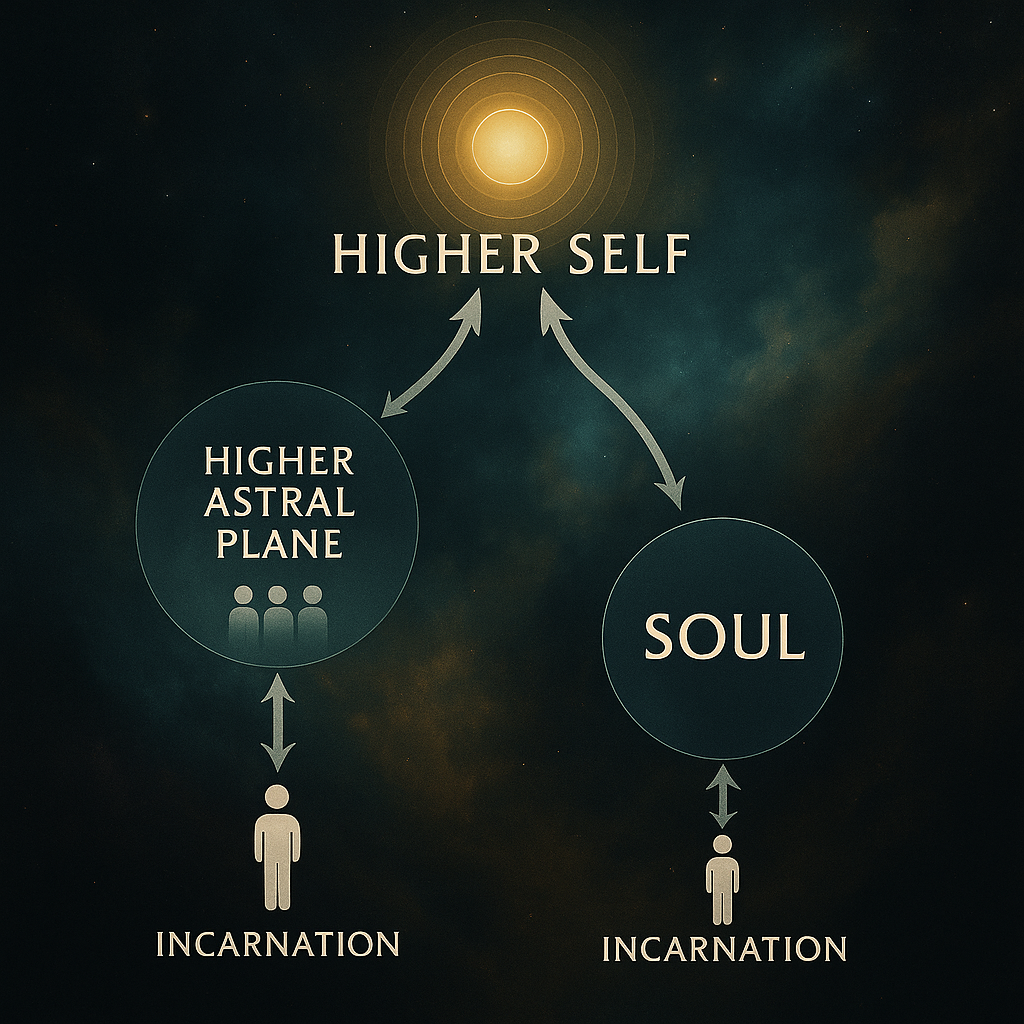
1. The Usual Path
- In most cases, yes — the soul communes with the Higher Self after moving through the astral planes.
- This is because the Higher Self holds the full blueprint, the master record of all incarnations, and is the one who enacts contracts through the incarnated soul.
- Communing ensures that every incarnation stays in harmony with the larger design.
2. Contracts Made in the Astral Plane
- It is possible for souls to make agreements in the astral plane itself.
- In the middle and higher astral, souls can meet, plan, and agree to incarnate together again.
- These agreements can act like localized contracts — the next life may unfold based on that astral arrangement without the soul first fully merging back into the Higher Self.
3. The Difference
- Astral contracts tend to be more personal: “We’ll meet as siblings next time,” or “I’ll play this role for you.”
- Higher Self contracts are more expansive: they account for karma balancing, long-term soul lessons, and the orchestration of the soul group across many timelines.
So, while a soul can incarnate again directly from the astral plane, this is usually under the broader oversight of the Higher Self anyway — even if the soul is not consciously aware of that guidance.
4. When This Happens
- Souls that are highly active or strongly bonded may incarnate quickly from the astral with agreements still fresh between them.
- This is often why certain people feel like they “just saw each other on the other side” — because they did.
- But ultimately, the Higher Self is always the coordinating hub. Even if the soul skips reintegration, its energy still threads back into the Higher Self’s awareness.